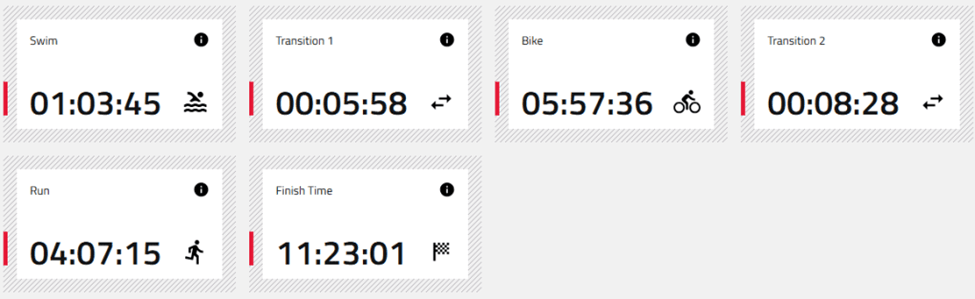
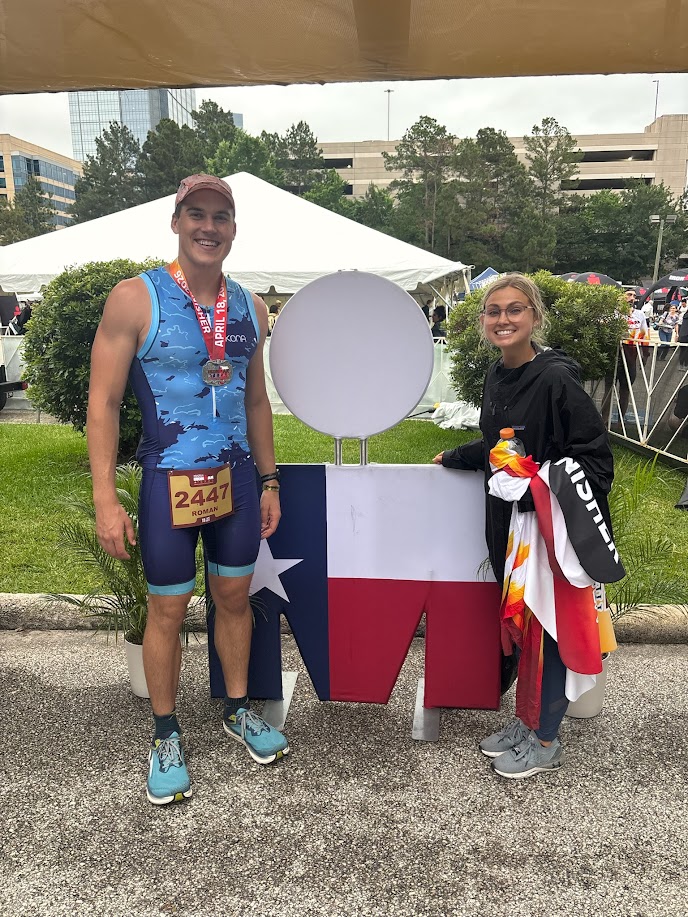
On April 18, I completed my first Ironman in 11 hours and 23 minutes. On the finish line, I knew that this was one of the most fun experiences of my life. This post is going to summarize how I prepared, how I executed my race, and my thoughts for the future.
Preparation part 1: Background
After water polo season concluded in November, I was Ironman curious. At that point, I was unable to run from a broken foot two months earlier. I began building fitness on the bike, mostly using the indoor trainer. Back then I was hoping that I could wait a couple months for my broken foot and a seemingly innocent knee problem to resolve themselves. Despite that knee issue getting progressively worse (I couldn’t run 100 yards), I mentally committed to training for the Ironman during the last week of January.
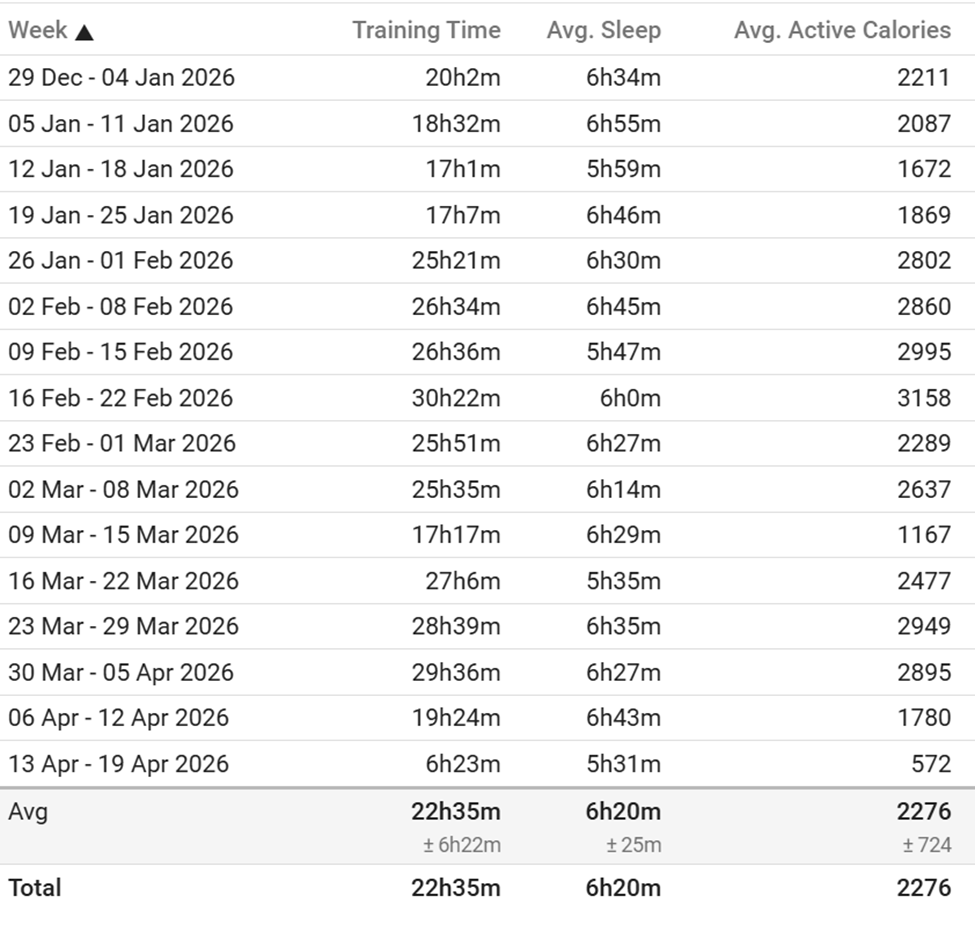
I tracked every workout with a Garmin FR265 watch and the reported data was all measured by that device. (Almost every day, this watch gave me a friendly reminder that my training readiness was a 1/100.) I used intervals.icu to view the data and track my progress. Below you will find a table that shows you an overview of some of the most defining metrics of my Ironman preparation.
Preparation part 2: Bike
Biking was the most consistent part of my training and contributed the most to building cardiovascular fitness. Since I tend to crash a lot when riding outside, I did 90% of my bike volume on the indoor trainer. This had a couple important consequences:
1) I had no idea how far I was riding or what my power was.
2) The saddles are not meant for 3 hour long rides
3) I was inside with no cooling, so my body temperature would get significantly higher than if I was riding outside.
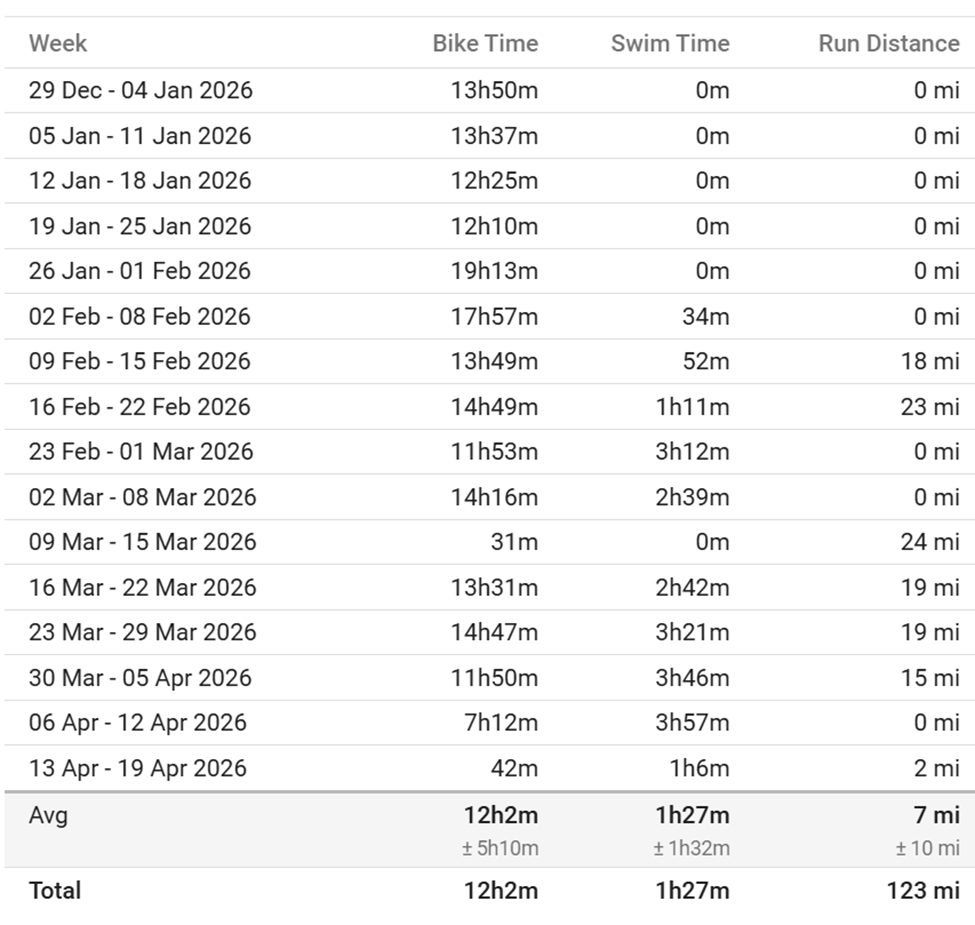
Almost all of my rides were steady state in zone 2. I didn’t do “easy” or “recovery” rides unless I was injured or it was time to taper. I occasionally did some sprint workouts that would consist of multiple rounds of 30/30s to push my aerobic ceiling higher. Total bike volume was higher than I would have preferred to compensate for a lack of running but I typically put in 12+ hours on the bike every week.
Preparation part 3: Swim
For most weeks of the Ironman prep, I swam 3 times per week. This increased slightly towards the end of the training block. All of my swim workouts followed a similar structure. My long warm up consisted of 600-1000 yards free, 100 back, 100 breaststroke, 100 of free drill 1, and 100 of free drill 2. From there, I would do 150s on the 2:10 with no breaks until it was time for a 200-250 yard cool down. I typically had one longer workout that was 4,000+ yards every week while the remaining workouts ended at around 3,000 yards. I progressed to a maximum weekly volume of 15,600 yards on the week of April 6th. I wasn’t trying to crush the swim. I was training my body to handle the swim comfortably so that I could perform later.
Preparation part 4: Run
This was the most frustrating part of Ironman prep. Even after recovering from the previously broken foot, I immediately encountered issues with my left knee. This prevented me from running significantly until midway through February. When I started re-introducing running then, I quickly developed an issue with my right knee where it would collapse inwards prematurely during the run. These injuries severely limited my running training.
My strategy was, if my knee wasn’t hurting too badly while walking, go for a run. Then I would run until my knee completely failed and that would determine my run distance. I decided to stop trying to run when I was two weeks out from the race and began my taper. Ultimately I only averaged 7 miles per week of running, which is much less than it should be.
Preparation part 5: All the other things
What about recovery? I never did ice baths, sauna, sports massages, acupuncture, red light therapy, or any other trendy health protocol. For Ironman training I follow the principle that “more is more”. The goal should be to fit in as much hard training in as possible. I believe that all these fluffy recovery techniques are a distraction from the goal. The more training you put in, the better your result is going to be.
I also lifted 4-7 times per week. That was just for fun. If my total training hours (Table 1) don’t add up with the sum of the activity times (Table 2), then that’s where those hours went.
The week of March 9th to March 15th, I was on vacation in Costa Rica. I did not do any of my normal training. Instead, I was surfing, hiking, running (poorly), doing body weight exercises, and doing yoga. I think my body was pretty trashed coming into that week, so the reduced training was actually beneficial.
Preparation part 6: Future Improvements
The most important change would be to start the Ironman prep in a non-injured state. My knee injury significantly impacted my ability to run, and it also made biking and swimming more uncomfortable than it should have been. I would have preferred to be struggling against cardiovascular and muscular strain during my training. Instead, it was just a test of how much joint pain I could endure. However, this did help build a good mental resilience to suffering.
One aspect of training that was neglected was nutrition. During this prep, I tried gels once where I slurped down 5 of them in 10 minutes to see if they would upset my tummy. They didn’t. However, on race day, I felt like a high carbohydrate fueling strategy helped me push significantly harder. After this experience, I believe that fueling during training (especially longer durations) would have resulted in a tangible improvement in performance. If small 10% gains could be stacked across every session throughout the prep, I think fitness would have been even higher on race day.
There were a few other things I would do to improve training. The indoor bikes at the gym had several issues. I would like to have my own indoor trainer that has a power meter and improved comfort. Additionally, the reduced transit time to the bike would free up a significant amount of time. If the time is available, I do think that it would be beneficial to sleep more. I also think it would help to have a friend, training partner, or coach review my training every week and give me feedback.
Execution part 1: Swim
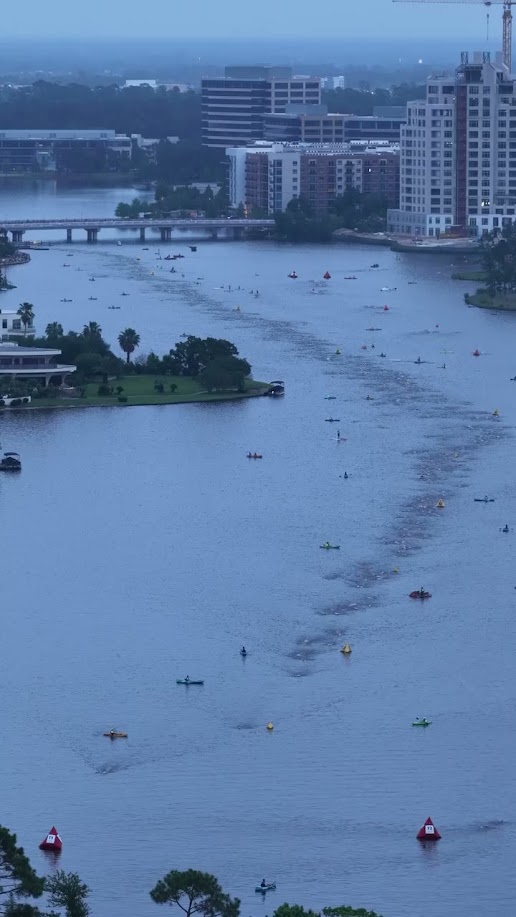
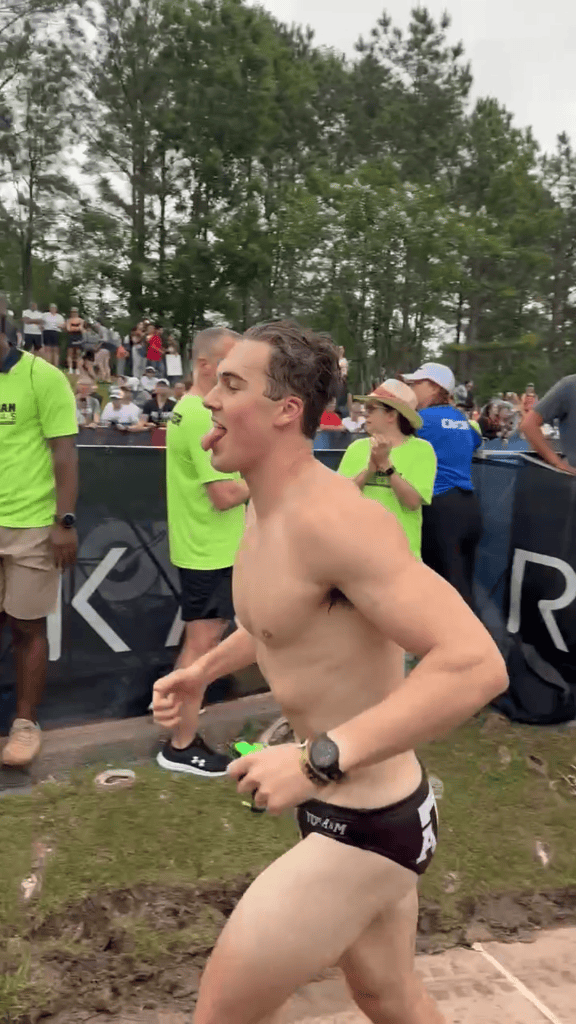
Out of the 2500 participants, I was one of the half dozen wearing a Speedo. This significantly improved my swagger-to-fabric ratio. At the start of the swim, you self-select into the staggered start based off your expected swim time. I lined up around the 1 hour 10 minute group which was close to my finishing time. Most other people didn’t. In the first third of the race, I had to pass hundreds of people, which was a bit annoying.
My right lat started hurting around 20-30 minutes into the swim and so my stroke got much wider than normal. I threw in some backstroke a few times to stretch the muscle in the opposite direction and give it some relief. By the end of the swim, everyone around me was swimming at the same speed due to selection by distance. From reviewing my heart rate data and the subjective difficulty, I was swimming very close to my limit.
After pushing so hard, I was little bit shell shocked coming out of the water. Transition 1 was a blur, but I did take a little bit more time than I needed. I was one of the only people towel changing. I put on my bike shoes in the change tent which wasn’t the best for running through the mud to get to my bike.
Execution part 2: Bike
I started the bike ahead of most people due to a strong swim. This meant that there were a lot of stronger bikers that passed me in the early part of this segment. They were riding spaceship bikes (aerodynamic, time trial bikes made for the ironman distance) and during descents they would fly away from me without even peddling. Without getting too much into male anatomy, aero position on my bike was really uncomfortable for 6 hours. I was trying to ride conservatively to preserve my knee for the run.
Aside from the aid stations, there were two primary incidents on the bike. Around mile 30 while riding down a hill, my front wheel crossed a long, 1 inch wide crack that crossed the road at small diagonal angle. I crashed and my handlebars were bent a few degrees to the right for the rest of the ride. Around mile 75, a spoke on the back wheel blew out and got caught in my bike chain. I dismounted, bent the spoke between some other spokes, and continued riding.
During the last third of the bike, there was some light rain which resulted in the roads accumulating some water. Most of the other riders started riding more cautiously on the downhills. However, I also realized around mile 85, that I was on pace to complete the bike a little over 6 hours. I started pushing harder and taking more risks downhill. I ended up passing some people in this segment of the bike and made it just under 6 hours.
In T2, I took extra time to use the bathroom and grab some extras from my T2 bag (Ibuprofen, chafing kit, and 2 protein bars). After leaving the tent, I was told to put on my bib number, which I did not have. I returned to the tent, tracked down the bib, and began to attach it to my tri suit. This was a really tricky operation, my fingers were swollen from the bike, and I’m really bad at working with small things anyways. Definitely lost time here.
Execution part 3: Run
Background: I had been thinking about this run every day for months. I was expecting to suffer. I was preparing for it. This was an opportunity to expose the rawest version of myself. I knew it was going to be hard and hurt. I wanted to find my limit. But I wanted to do it on my terms. I wanted to dance around that edge. I wanted to do it with a smile on my face and enjoy it.
I was also convinced that my body would fail. I always thought I would be an Ironman. However, I expected to finish physically broken and to judge my own success by my mental resilience.
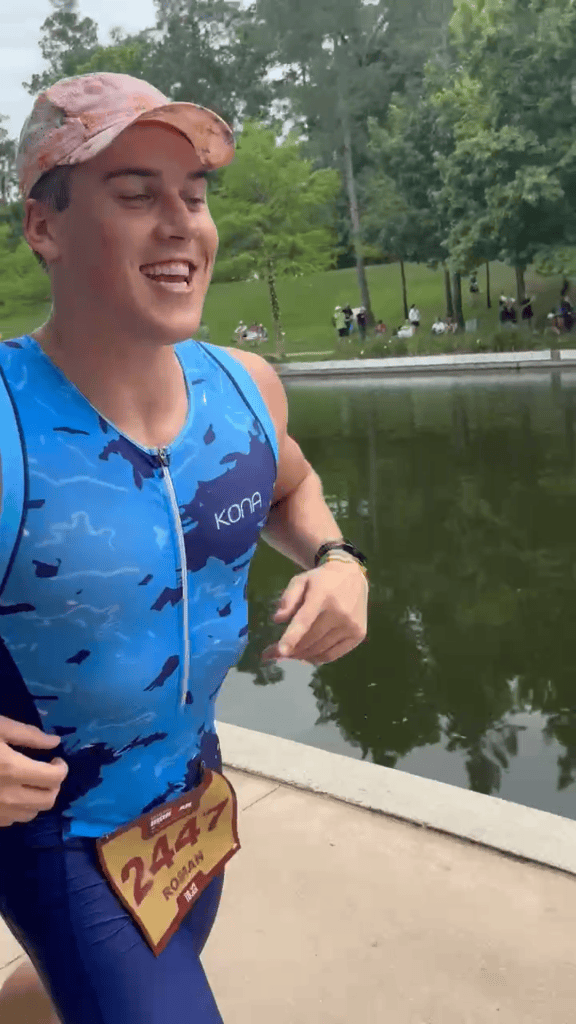
So, this where the day got really hard. I started running miles around 8:30 pace. On the first lap, I was surprised that my knee wasn’t immediately locking up. Rushing efficiently through the aid stations was really fun. At every aid station, I poured ice water on my head, drank electrolytes, and replenished gels while dumping trash in the trash zones. As I ran along the course, there were thousands of spectators cheering me onwards. On each lap, I passed Em and Gavin which was an incredible boost. (Thank you guys for being awesome.)
By the time I was on the second lap, my body was telling me a strong no. It felt like my legs were begging to stop but I would negotiate just a little bit farther. I constantly recommitted to keep moving for just one more mile. In these moments, I used the past as fuel. I thought about waking up at 5:20 AM, workouts that I wanted to quit, training through injuries, mini vomits, and other unpleasant things. I told myself that I was comfortable being uncomfortable. I decided that this was enjoyable.
By the third lap, my legs were gone. Shot. I don’t know how to describe it. Running a 10:30 mile felt like Atlas decided to just let the weight of the world sit on his legs. My legs hurt more than more than running with rhabdo. More than when I did the 50 mile Grand Canyon R2R2R in a single day. Until the last mile of the run, I was convinced that my body was going to fail me. I just decided that it wasn’t happening in the next few steps. Then I repeated that choice over and over again.
Sometimes while running I would forget that I wanted this. But then I would remember. This is exactly what I was looking for. And in those hard moments, I found that I was the person I wanted to be. It’s hard to explain why this confirmation meant so much to me. But it did. So, as I was running, I was in pain. Undeniably. But I was also so happy.
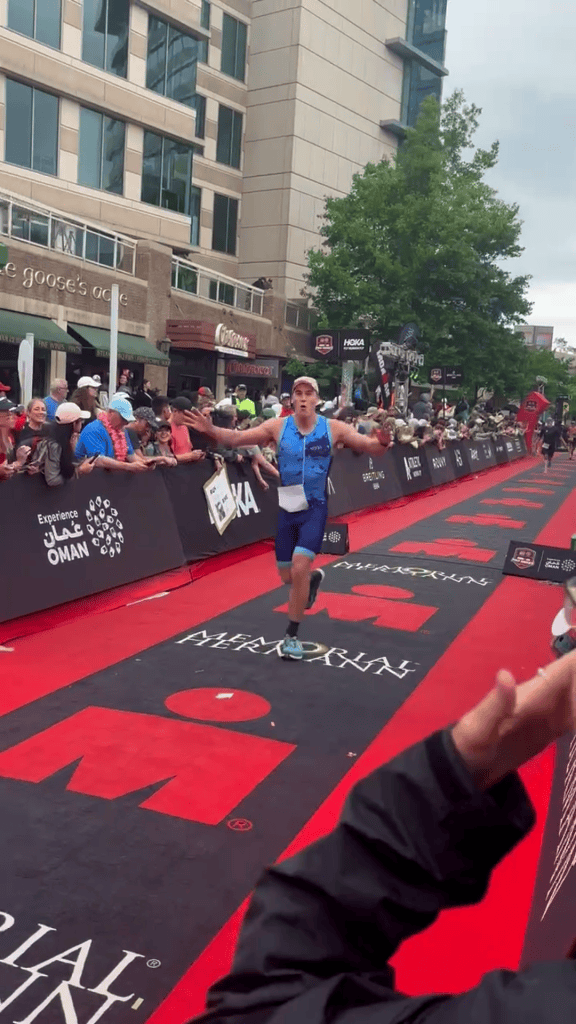
I crossed over the finish line smiling like an idiot. I was exhausted physically and mentally. Luckily, I had Gavin and Em who shepherded an incoherent, 230-lb bean bag safely back to the hotel.
Execution part 4: Fueling
I was sucking down 160 g/hr of carbs using the maurten gels and never had any stomach discomfort. I obviously did not consume anything on the swim, but I did pregame with 200 grams of carbs from candy that morning. There were two deviations from the 160 g/hr fueling strategy. During the first two hours of the bikes, I didn’t realize that I was consuming 40 gram gels instead of 25 gram gels, so my carb intake was ~240 g/hr for the start of the bike. Aside from the gels, I ate two protein bars shortly after starting the run and those were the only thing that made my tummy feel weird.
I drank 80% electrolyte drink and 20% regular water on the bike and run. I consumed roughly 9 liters on the bike, and I grabbed 2-3 cups at each aid station along the run. I also consumed a total of 600 mg caffeine and 6 ibuprofen pills. The caffeine was consumed by 100 mg maurten gels and ibuprofen taken in 3 sets of 2 pill doses. The consumption of both of these drugs was evenly distributed starting halfway through the bike through mile 18 of the run.
Overall, I was happy with this fueling strategy and I would do it again. The only thing that I would change is having electrolyte drink and some gels on my bike coming out of T1. I did not do this, so I did not start replenishing fluids and carbs until I hit the first bike aid station ~40 minutes later.
Execution part 5: Surpassing predictions
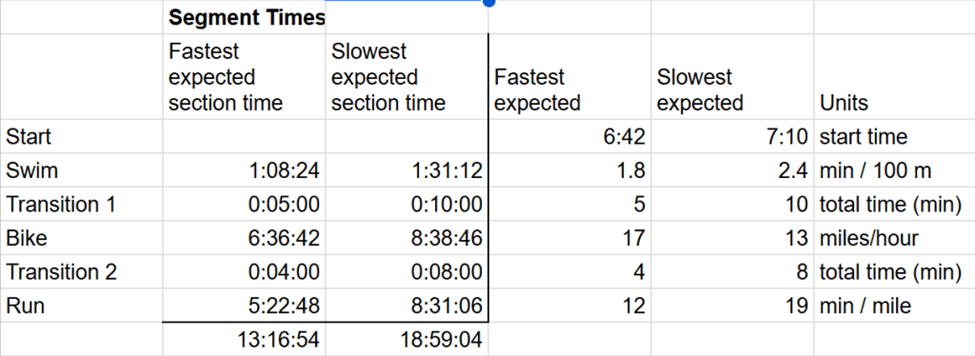
On race day, I significantly exceeded my expectations for myself. Before the race, my fastest prediction was finishing in 13 hours and 16 minutes. I ended up finishing in almost two hours less than that. How did this happen?
A combination of factors produced the result. Throughout the Ironman prep, my true fitness level was obscured by a combination of training fatigue and lack of sleep. During the two weeks before my race, training volume was tapered down, sleep improved, and I carb loaded in the three days before racing. I expected my knee to completely fail, which didn’t happen. I also did not realize the performance benefits of high carb fueling. The final element was that I was able to reach a mental state where I was able to push harder than expected.
Execution part 6: Future Improvements
In terms of effort, I think that I paced the swim and the run well for my fitness. When reviewing my heart rate data, it was relatively low for the bike portion since I was riding conservatively. Assuming that I don’t have the same knee issues for my next event, I would definitely push harder on the bike.
My bike was a road bike with the cheapest clip on aero bars I could find. Next time, if I don’t have the same budget constraints, I would definitely get a spaceship bike. I think getting a professional bike fit would also improve comfort/power in the TT position.
What’s next?
The Ironman was amazing and I would love to start training for another one. The biggest problem is the time. This prep contained 9 weeks of over 25 hours of training time. Additionally, more time is required to support that increased training (time to go to the gym/pool, more showers, more laundry, more food). I just can’t commit that amount of time to Ironman in the next year of my life. This summer, I plan on filling my weekends with lots of travel to visit family, friends, and trails. This fall, I am currently planning on playing my last season of Waterpolo with the club at Texas A&M. This was an awesome experience last year and I’m excited to return with a great group of guys.
In parallel with that, I want my knee issues to resolve so that I can run pain free again. Last summer, I was able to run 50+ mile weeks, and I would like to have that level of durability again. The next endurance event I want to sign up for is a road marathon. I am also curious about ultra-marathons but that is for much farther in the future. The training for these events would require 35-50% less time than Ironman, which is more compatible with having a life outside of training.


Leave a Reply